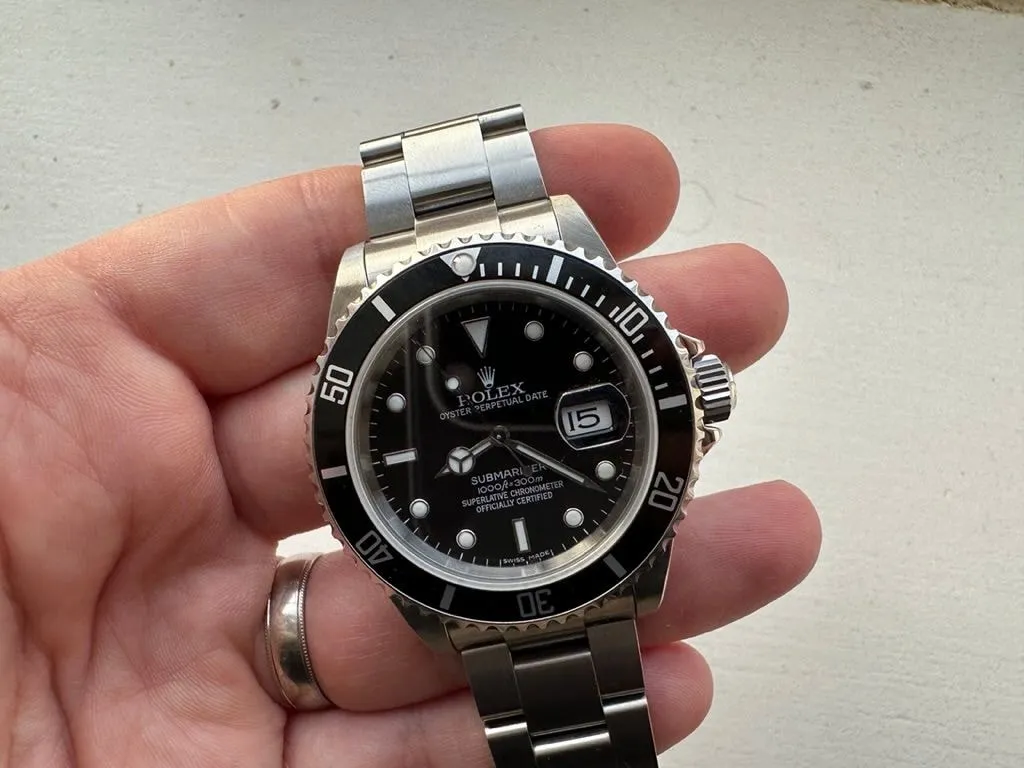
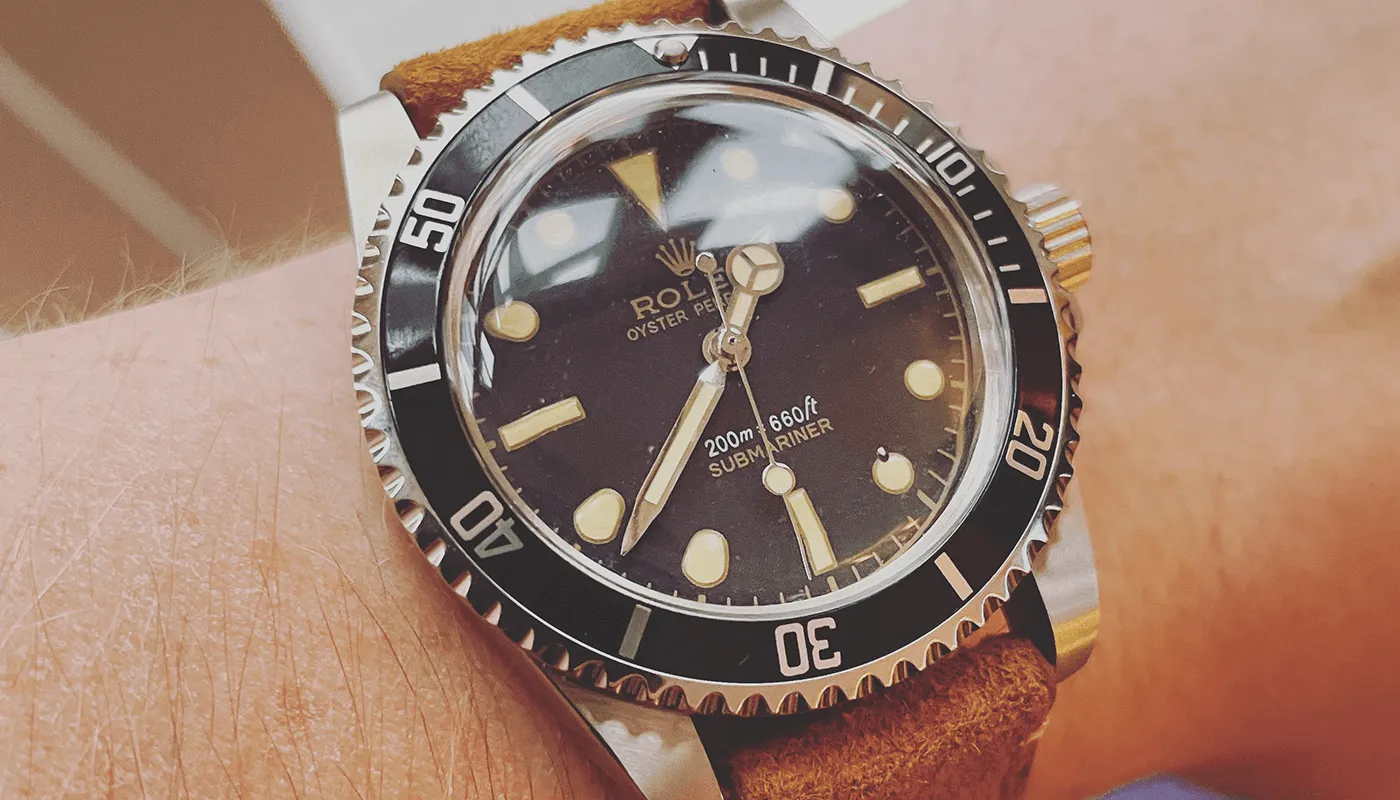
My genuine 2002 Rolex Submariner 16610 next to my 16610 franken
An honest owner’s comparison of a genuine 2002 16610 and a franken build, with the variant timeline, 2026 prices and the checks that protect you when buying.
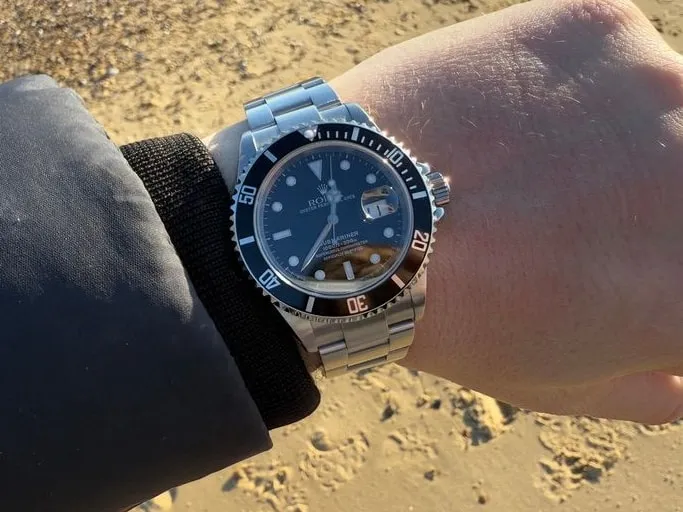
I own two Submariner 16610s. One is a genuine 2002 watch. The other is the franken I put together from a complete base watch running a 3135 clone movement, which I wrote up in my 16610 franken build post. This post isn't about how the build went. It puts the two side by side and asks two questions: what does the genuine watch give you that my build can't, and if you're buying a real 16610, what should you check before you hand over the money?
I want to be clear about what this isn't. It isn't a guide to making a build pass as the real thing, and it won't rank the differences by how easy they are to hide. My build is a franken, and that's how this post describes it.
Why the 16610 is worth owning for real
The 16610 replaced the 168000 around 1988, with the calibre 3135 as the main change, and ran until the ceramic 116610 took over in 2010. It's the last Submariner Date with the slim lugs and an aluminium bezel insert. The 116610 that followed isn't a bigger watch on paper (both are 40 mm), but its broader "Super Case" lugs make it wear larger. Aluminium scratches and fades where ceramic resists both, and for a lot of people that ageing is the point.
The case is 40 mm across and 12.7 mm thick, rated to 300 m, with a 20 mm lug width and a Triplock screw-down crown. The genuine cal. 3135 has 31 jewels, runs at 28,800 vph with about 48 hours of power reserve, and is a COSC-certified chronometer (COSC allows an average of −4/+6 seconds a day).
That is the case for the genuine watch. It has a documented history, a movement that was certified when it left the factory and that Rolex or any independent watchmaker can service with genuine parts, and a value that holds. My build has none of those things, however good it looks across a room.
I bought my 16610 from a UK seller. It's the classic Submariner I'd wanted since getting into watches, the last generation with the aluminium bezel and slim lugs.
The 16610 variant timeline
Rolex doesn't publish production dates by reference, so the dates below are circa figures and sources disagree by a year or so. Treat each date as "around", not as a hard cut-off.
| Feature | Change | Roughly when |
|---|---|---|
| Launch | Replaces the 168000; cal. 3135 | Circa 1988 |
| Dial text at 6 | Tritium lume, "SWISS – T < 25" | Up to about 1999 |
| Dial text at 6 | Luminova lume, "SWISS" only | Around 1999–2000 |
| Dial text at 6 | "SWISS MADE" | Around 2000–01 onwards |
| End links | Solid end links (93250 bracelet) replace hollow ones | From 2000 |
| Lug holes | Drilled lugs; the lugholeless 16610T follows | Holes to 2002; 16610T from 2003 |
| Green bezel | 16610LV introduced (same reference as the "16610V") | 2003 |
| Rehaut | Plain, then engraved | Engraved from around 2007 |
| Serial position | Between the lugs at 6, then also on the rehaut | Rehaut serial from 2005 |
| Replacement | 116610 with ceramic bezel and Super Case | 2010 |
What my 2002 watch should have
Read against that timeline, a 16610 made in 2002 should have:
- A "SWISS MADE" dial, not tritium "T < 25" or "SWISS" only
- Solid end links on the bracelet, if it's still on its original one
- Lug holes, since 2002 is the last year before the 16610T. Because the dates are approximate, a watch right at the changeover could go either way
- A plain, unengraved rehaut and no serial on it
- A serial letter around Y between the lugs at 6. 2002 watches are generally Y, with K or Y in 2001, and serial charts differ by about a year, so a serial gives you a one-to-two-year range rather than an exact year
That list is an inference from the timeline, and it needs checking against the watch itself.
Mine matches that list.
Side by side: what a 3135 clone can and can't match
My franken runs a 3135 clone from the SH3135/VR3135 family, not an NH35. That matters, because one popular "tell" is that a non-genuine Sub gives itself away with a six-beat sweep. A 3135 clone is built to copy the 3135, so that rule of thumb doesn't apply here, and I'm not going to claim either watch sweeps better without measuring it, and I haven't put either on a timegrapher, so the table below sticks to what's known. If you want to measure your own watches, my timegrapher app guide covers the basics.
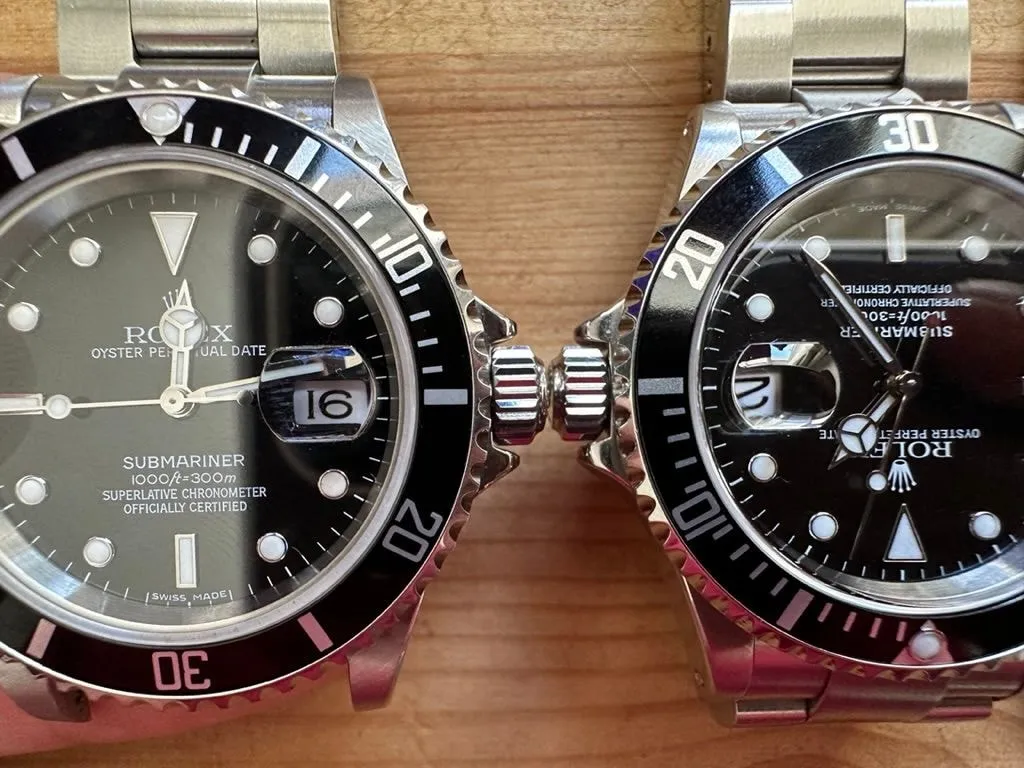
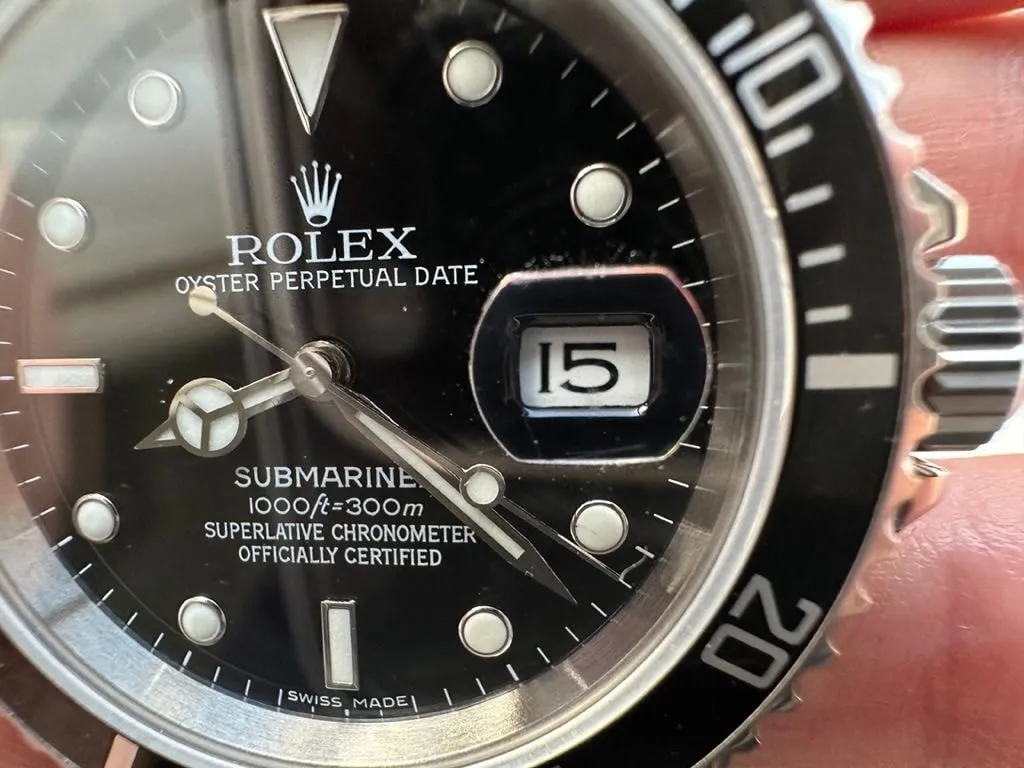
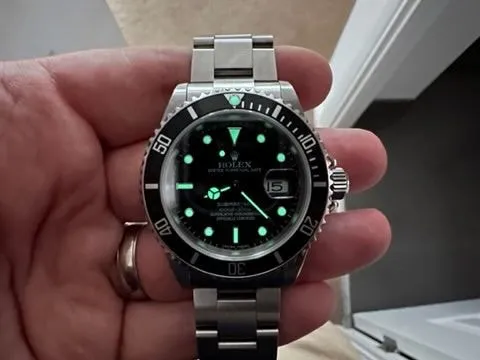
The genuine watch is on the left. In hand, the genuine bezel action feels crisper.
| Check | Genuine 2002 16610 | My franken |
|---|---|---|
| Movement | Rolex cal. 3135, COSC chronometer | VR3135 (3135 clone) |
| Published spec | 28,800 vph, about 48 h reserve | No reliable published spec |
| Provenance | Serial between the lugs | None: a modified watch with no history |
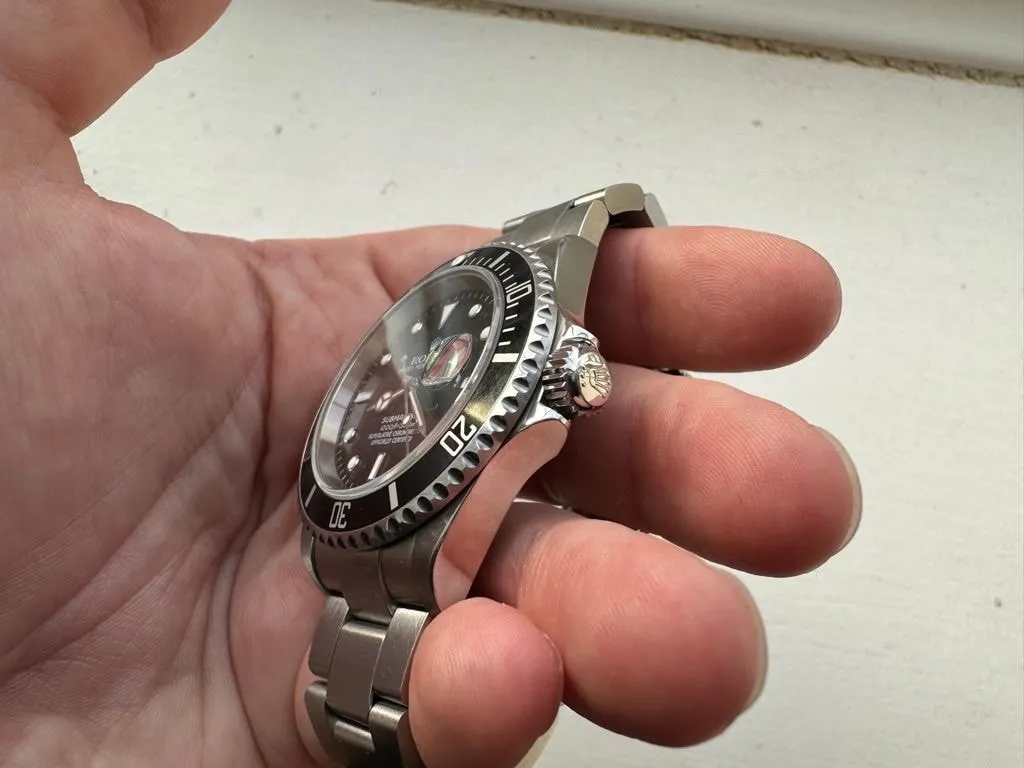
Because my franken has a genuine bezel insert and crystal, the cyclops and bezel look the same side by side. The differences are in the dial printing up close and the bracelet, which feels lighter and rattles more on the franken.
The VR3135 dropped straight into the case without a spacer.
What my franken is, part by part
A franken is a watch built from a mix of genuine and non-genuine parts, so the honest way to describe one is to list which is which.
- Genuine Rolex: bezel insert, crystal and date wheel
- Aftermarket: dial, hands, case, crown, bracelet and clasp
- Movement: VR3135, a 3135 clone
Buying a genuine 16610: what to check
If the side by side does anything, it should send you towards the real thing with your eyes open. These are the checks widely published for buyers. None of them is proof on its own.
- Does the watch match its year? Use the timeline above. A dial, bracelet, lug or rehaut detail that doesn't fit the serial's era isn't automatically a problem, since parts get replaced at service, but it's a question to ask and get answered in writing.
- The serial. On a 16610 made before 2005 it sits between the lugs at 6, so you'll need the bracelet off. Expect a year range, not an exact year.
- The cyclops. The genuine date lens magnifies about 2.5x; many non-genuine lenses manage roughly 1.5x.
- The rehaut. An engraved rehaut only belongs on later 16610s from around 2007. On a watch from the early 2000s it should be plain.
- The crown. A Triplock crown has three dots under the coronet.
- Nothing that can't be true. A 16610 never had a ceramic bezel or a 904L case; both arrived with later references. A listing that claims either is wrong about something.
- Box, papers and service history add confidence and value, but they are documents about a watch, not the watch itself.
The only conclusive check is opening the case. Every external check above can be met, missed or misread, so have a competent watchmaker open the caseback and look at the movement before you buy, or buy from a seller who will let you do that and offers a meaningful guarantee.
Rolex's own Certified Pre-Owned scheme launched in December 2022, with the UK among the first six countries. Watches must be at least three years old and come with a two-year guarantee. It isn't confirmed whether it takes a 16610 of this age, so ask a CPO retailer directly.
I checked the serial and compared it closely with photos of known examples. It hasn't been opened by a watchmaker yet.
What a 16610 costs in 2026
These are a snapshot, not a valuation. Prices vary a lot with condition, box and papers.
- Market estimates: around US$9,244 for the black 16610 and around US$13,449 for the 16610LV in August–September 2026 (in US dollars).
- UK dealer asking prices: roughly £8,000 to £8,750 in 2026, at the bottom for a 2005 watch and at the top for a 2001 full set. Those are asking prices, not sold prices.
- New, for comparison: the current no-date Submariner 124060 lists at £8,450 in the UK in 2026.
So a good 16610 costs about the same as a new Submariner. You're choosing the slimmer lugs and aluminium bezel of the five-digit watch over a warranty-fresh ceramic one, not saving money. A franken costs a fraction of either, but you don't get a Rolex for that money, and it won't hold value the way a genuine watch does.
If you own a franken, say so
Building and wearing a franken for yourself is the lowest-risk end of this hobby. Selling one is different. In the UK, section 92 of the Trade Marks Act 1994 makes it an offence, with a view to gain, to sell goods bearing a sign without the owner's consent, and the Supreme Court held in 2017 (R v M) that this can reach goods that were made with consent but sold without it. The research for this post found no UK case law or Trading Standards guidance specific to frankenwatches, so this is an unsettled area. If you ever sell one, describe it as a franken or modified watch, not as a Rolex, and list every genuine and non-genuine part. This isn't legal advice, so get proper advice before you sell.
My take
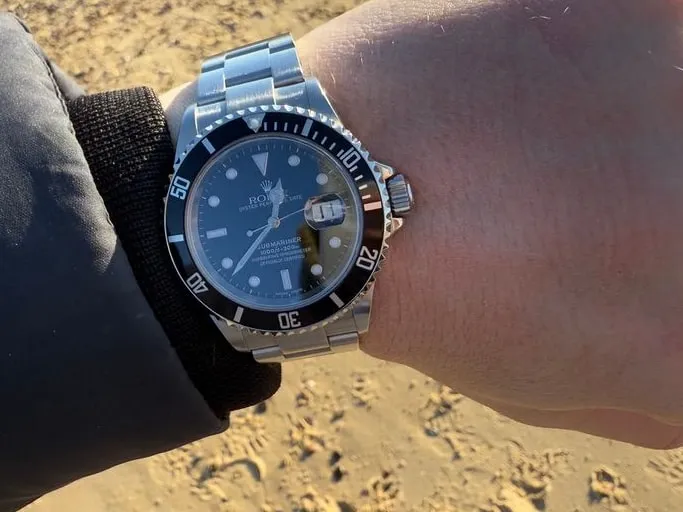
The genuine watch has the history and the feel. The bracelet and the solidity are where the build gives itself away. I reach for the genuine one, and the franken gets worn when I don't want to worry about it.
If you want to know where the 16610 sits in the Submariner family, my 5513 vs 1680 vs 16610 guide covers the references before it, and my first 5513 build is where my own Submariner builds started.