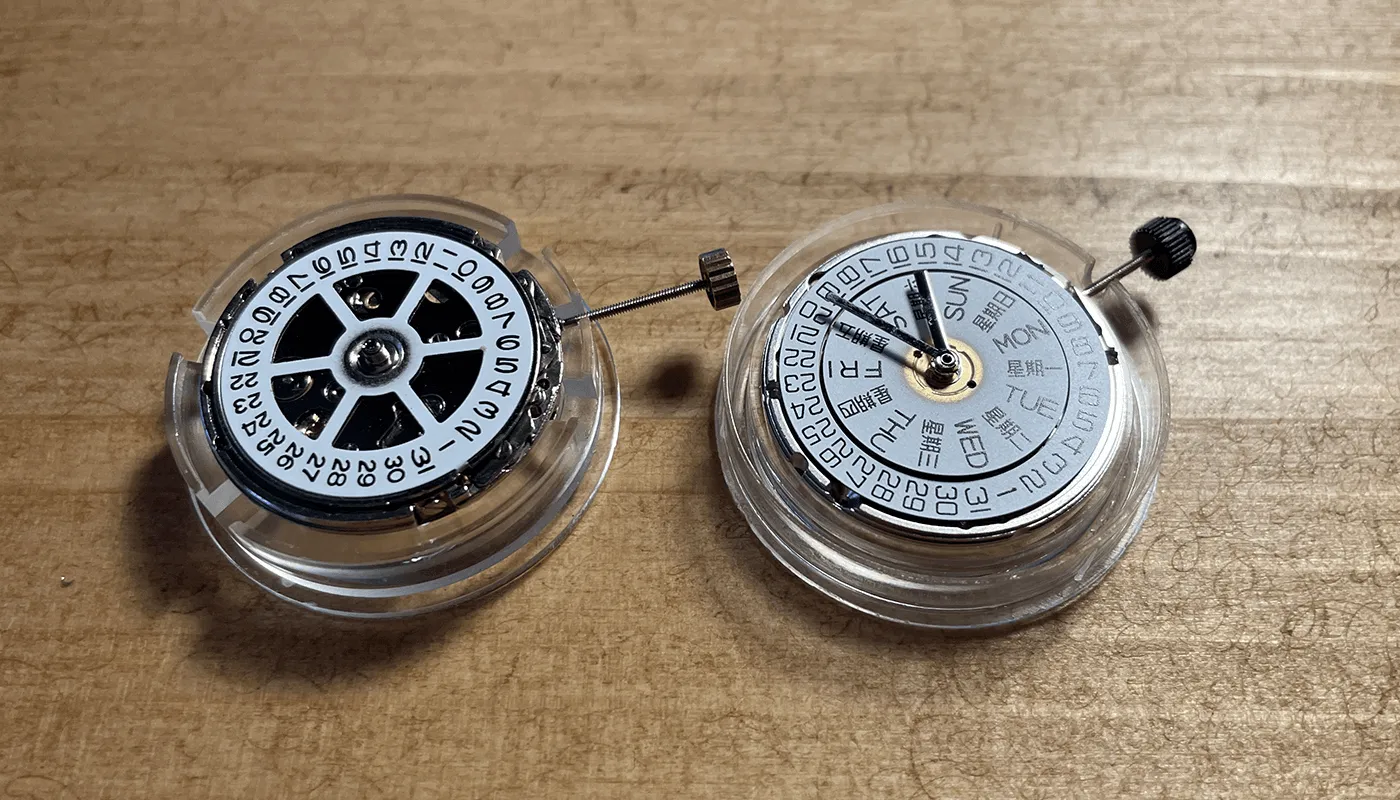
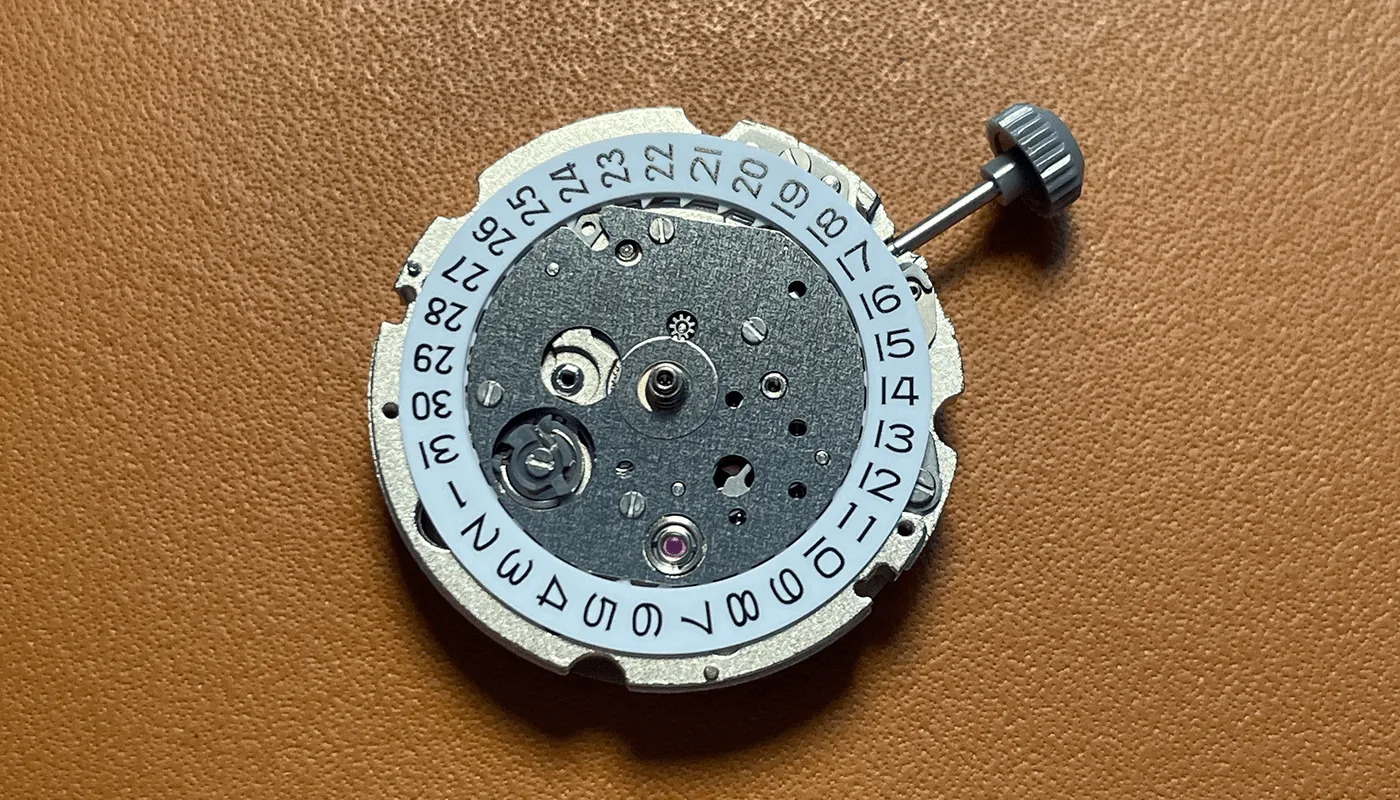
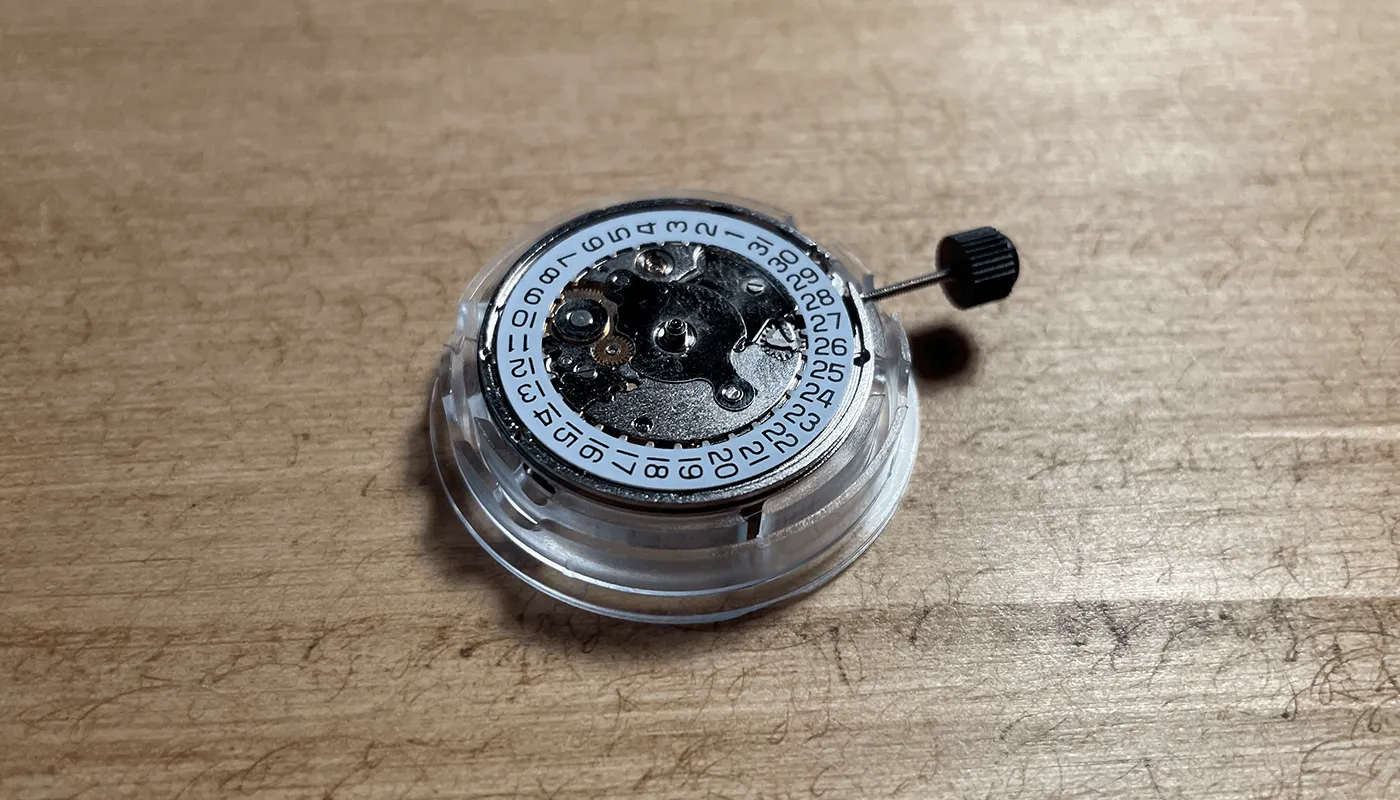
Watch hand sizes chart: 2813, 2824, 2836, Miyota 8215, NH35
Hour, minute and seconds hole sizes for the popular build movements in one table, plus which hands swap between them and which do not.
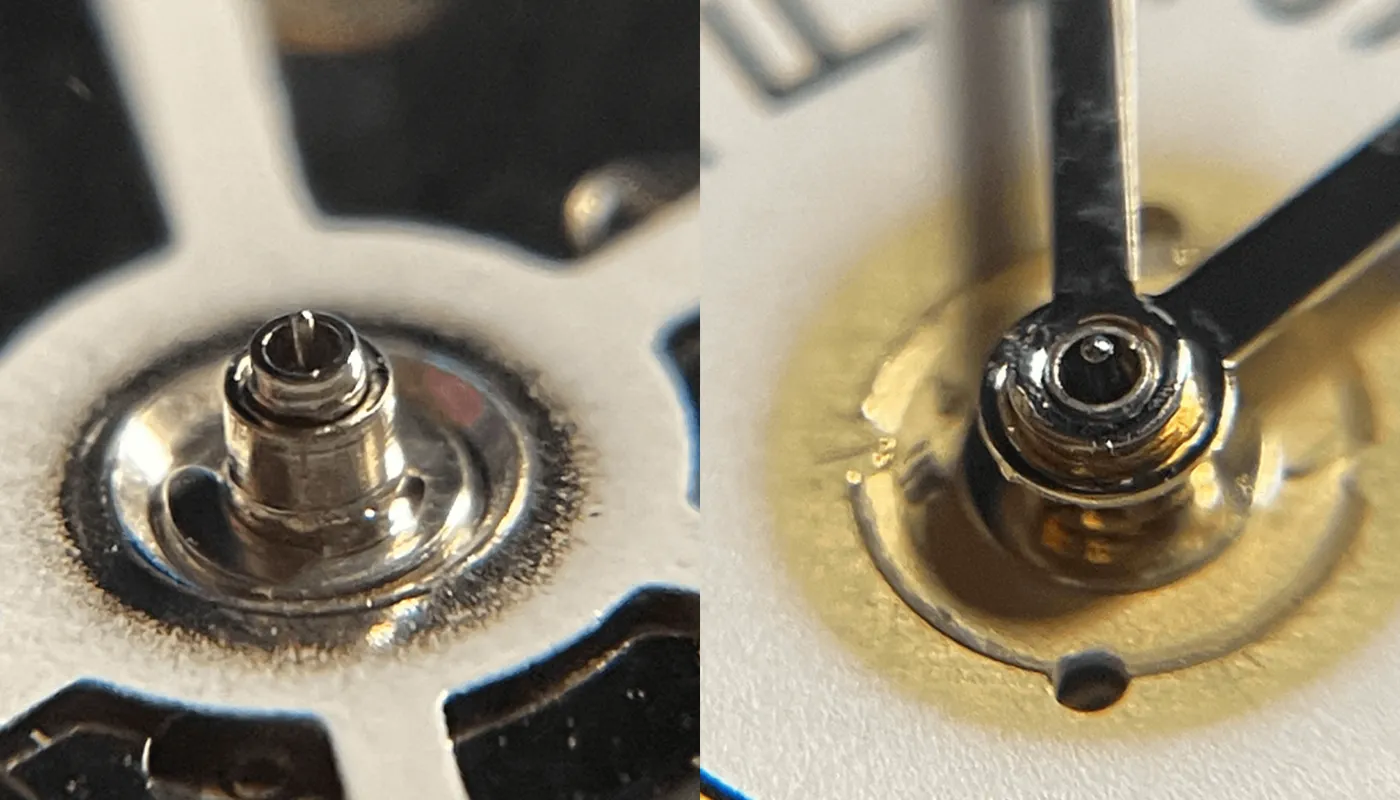
The most common mistake I see (and made myself) on a first build is buying hands that don't fit the movement. Hands look interchangeable in listings, but the holes in them have to match the posts on the movement to a few hundredths of a millimetre. This page is a quick reference for the movements I build with, the Asian 2813, 2824 and 2836 and the Miyota 8215, plus the Seiko NH35 because so many people are choosing between it and the others.
I have checked these figures against my own movement reviews and against published spec figures. Where they disagree, I say so below.
Watch hand sizes chart
Sizes are hole diameters in millimetres, hour / minute / seconds. Listings often write them without the decimal point, so 1.50 / 0.90 / 0.25 appears as 150/90/25.
| Movement | Hour | Minute | Seconds | Listing code |
|---|---|---|---|---|
| Asian 2813 (DG2813) | 1.50 | 1.00 | 0.17 | 150/100/17 |
| Miyota 8215 | 1.50 | 1.00 | 0.17 | 150/100/17 |
| ETA 2824-2 and Asian 2824 | 1.50 | 0.90 | 0.25 | 150/90/25 |
| ETA 2836-2 and Asian 2836 | 1.50 | 0.90 | 0.25 | 150/90/25 |
| Seiko NH35 (and NH36) | 1.50 | 0.88 (0.90 also quoted) | 0.21 (0.20 also quoted) | 150/88/21 |
These figures come from published movement specs and my own reviews. The Asian 2824 and 2836 are clones of the ETA calibres, and my reviews of both list the same 1.50 / 0.90 / 0.25.
Which movements share hands?
The five movements fall into three groups.
2813 and Miyota 8215: same hands
The 2813 is modelled on the Miyota 8200 family, not on the ETA 2824, so it takes the same 1.50 / 1.00 / 0.17 hands as the 8215. In my reviews I also found they share the stem position and dial feet, which is why the 2813 is such a popular cheap stand-in for the 8215.
2824 and 2836: same hands
The 2836 is the day-date version of the 2824, and both use 1.50 / 0.90 / 0.25. A set of 2824 hands will fit a 2836 and the other way round.
NH35: close to the 2824, but not the same
The NH35 has the same 1.50 hour hole as the 2824 and 2836. Its minute hole is usually listed as 0.90, but some listings give 0.88, so a 0.90 2824 minute hand may not be a snug fit; check it before you press. The seconds hand doesn't swap. A 0.25 mm seconds hand from a 2824 is too big for the NH35's 0.21 mm pinion and will be loose. Don't try to squeeze the tube to make it fit; buy an NH35 seconds hand instead.
The big trap: 2813 hands on a 2836
Because the 2813 and 2836 are both cheap Asian movements used in similar homage watches, people often assume their hands swap. Only the hour hand does. The minute hand hole is 1.00 on the 2813 and 0.90 on the 2836, and the seconds hole is 0.17 against 0.25. There is more on the differences in my 2813 vs 2836 comparison and the wider NH35 vs Miyota 8215 vs 2813 vs 2836 guide.
How hand hole sizes are measured and listed
The size is the diameter of the hole in the hand, which matches the diameter of the post it fits on. Each hand sits on a different part of the movement:
- Hour hand: the hour wheel, the widest and lowest post.
- Minute hand: the cannon pinion, the next step up.
- Seconds hand: the seconds pinion, the thin pin sticking out of the top.
Sizes are written hour / minute / seconds, sometimes in hundredths of a millimetre (so 120/70/18 means 1.20 / 0.70 / 0.18 mm). Watchmakers measure loose hands with a hand gauge, a plate with a row of tapered posts, and read off the size where the hand stops. To measure the movement itself, you put a digital gauge or calipers across each post.
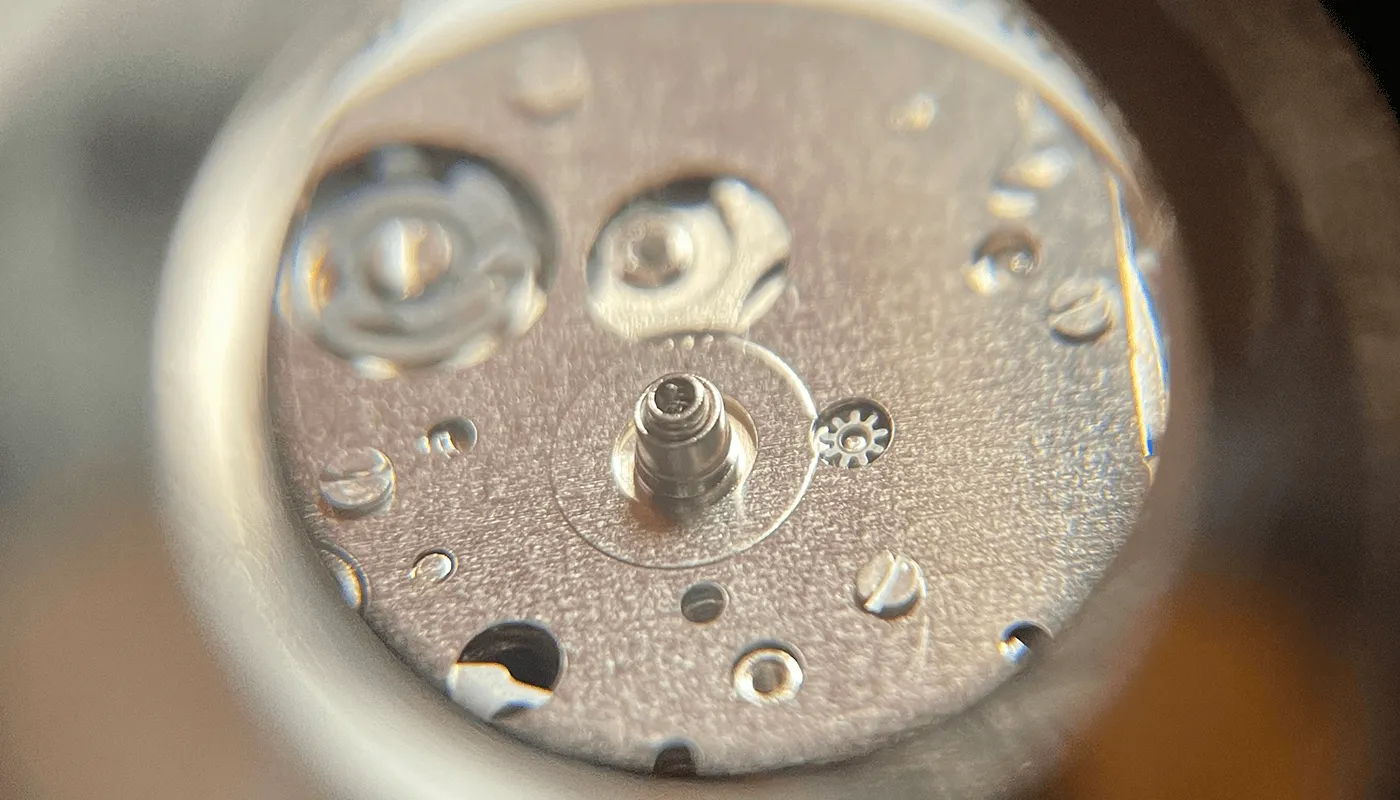
Calipers are fine for telling a 0.90 from a 1.00 minute post. They are not really accurate enough to tell 0.20 from 0.21 on a seconds pinion, so for the seconds hand trust the movement's spec rather than your own measurement.
I measured the posts on my own movements with the same digital calipers I use for stems. The 2813's minute post read 1.00 mm and the 2836's 0.90 mm, matching the chart. The seconds pinion is too small to measure reliably with hobby calipers, so for that one I go by the listed size.
Hand length and dial size
The hole size decides whether a hand fits the movement. The length decides whether it looks right on the dial. Lengths are measured from the centre of the hole to the tip, and listings usually quote the minute hand length.
- Minute hand: should reach the minute track, the ring of small marks around the edge of the dial.
- Hour hand: usually ends at or just inside the hour markers.
- Seconds hand: usually as long as the minute hand or a little longer, often with a tail on the other side of the centre.
To work out what you need, measure from the centre of your dial to the minute track with calipers, and buy hands whose minute hand length is about that. For example, NH-family dials are usually 28.5 mm across, so the radius is 14.25 mm, and the minute track sits somewhere inside that depending on the design. A hand that is too long will hang over the rehaut (the inner edge of the case) and can catch on it. A hand that is too short looks stubby, and is the classic sign of a build put together from mismatched parts.
My Explorer builds use cases that take a 28.5 to 29 mm dial, and I bought hands listed as Explorer or Submariner style for that size. They fitted without any trimming, so I've never needed to measure lengths myself.
Hand stack height matters too. The ETA 2824-2 is made with different hour wheel heights (1.25 mm is a common one), and that changes how high the hands sit and how much room is left under the crystal. If your hands come close to a flat crystal, that may be why.
What if a hand is slightly too big or too small?
Hands are a friction fit, so there is very little tolerance.
- Hole too big (for example a 1.00 mm minute hand on a 0.90 mm post, or a 0.25 seconds hand on a 0.17 or 0.21 pinion): the hand won't grip. It may look fine at first but then slips, so the time on the dial drifts from the time the movement is keeping, or the hand falls off when the watch is knocked.
- Hole too small (a 0.90 minute hand on a 1.00 post, or a 0.17 seconds hand on a 0.25 pinion): it either won't go on, or you have to force it. Forcing a seconds hand is how you bend or snap the pinion. Forcing an hour or minute hand can split the hand's tube or push the wheel underneath out of place.
- A couple of hundredths out: sometimes this works. My 2813 review lists the hour post as 1.52 mm and 1.50 mm hour hands fit it fine. But don't count on it, especially for the seconds hand.
Some people tighten a loose tube a little by squeezing it with a pin vice. There is no guarantee it will work, and a correct hand is cheap compared to a damaged movement. Fitting technique is covered step by step in how to fit watch hands without damaging the dial.
Where the figures disagree
The sizes above are the most widely quoted ones, but not every source agrees, and clone movements vary from factory to factory. Here is what I found when cross-checking:
- NH35 seconds: 0.21 or 0.20? Listings disagree: most give 0.21 mm, some 0.20 mm. None of these are Seiko's own figures, so I couldn't confirm either way. If you are buying NH35 hands, look for listings that say they are made for the NH35/NH36 rather than going by the number alone.
- NH35 minute: 0.90 or 0.88? 0.90 mm is the figure you'll see most often, but some listings give 0.88 mm (with 1.5 hour and 0.2 seconds). Neither comes from Seiko. NH35-specific hands are made to suit, so buy those rather than borrowing 2824 hands.
- 2813 hour hand: 1.50 or 1.52? My 2813 review gives the hour post as 1.52 mm, while most listings give 1.50. In practice 1.50 mm hour hands fit, so buy 1.50.
- 2813 seconds: 0.17 or 0.16? My review and most listings say 0.17, though 150/100/16 is occasionally quoted. Hands sold for the 2813 and 8215 are normally listed as 0.17.
- 8215 minute hand: 1.00 mm. My 8215 review has 1.00 in its spec table but says 0.90 in the text further down. The table and published specs agree on 1.00, so that is the right figure.
- Clone variation. The 2813, 2824 and 2836 clones are made by several factories. The sizes here are the standard ones, but if a hand feels wrong, stop and measure rather than pressing harder.
I haven't had hands fail when the hole sizes matched. The one time hands didn't fit was my silver dial Datejust, and that was my mistake: I'd bought hands made for a 2836, whose 0.90 mm minute hole won't go over the 2813's 1.00 mm post.
If you're still choosing a movement, check that hands in the style you want are available for it before you commit. My where to buy watch parts guide covers suppliers.