How to tell if your watch is magnetised and fix it
A sudden big gain is usually magnetism, not a regulation problem. Here is how to test for it with a compass and fix it in seconds with a cheap demagnetiser.
Your watch was keeping decent time, then overnight it started gaining a minute or more a day. Before you start pulling the caseback off to regulate it, check for magnetism. It is by far the most common cause of a sudden big gain, it's easy to test for, and a cheap demagnetiser fixes it in a few seconds.
Symptoms of a magnetised watch
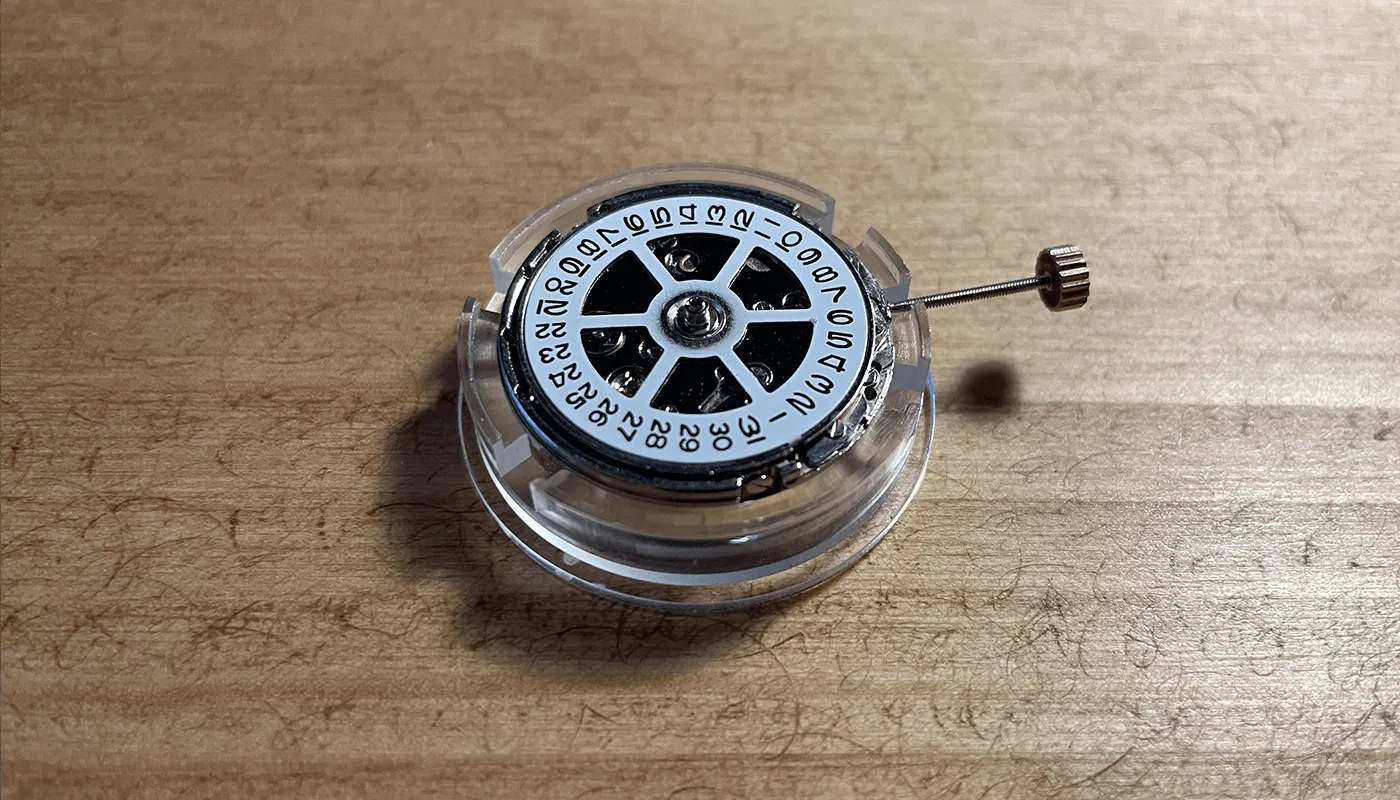
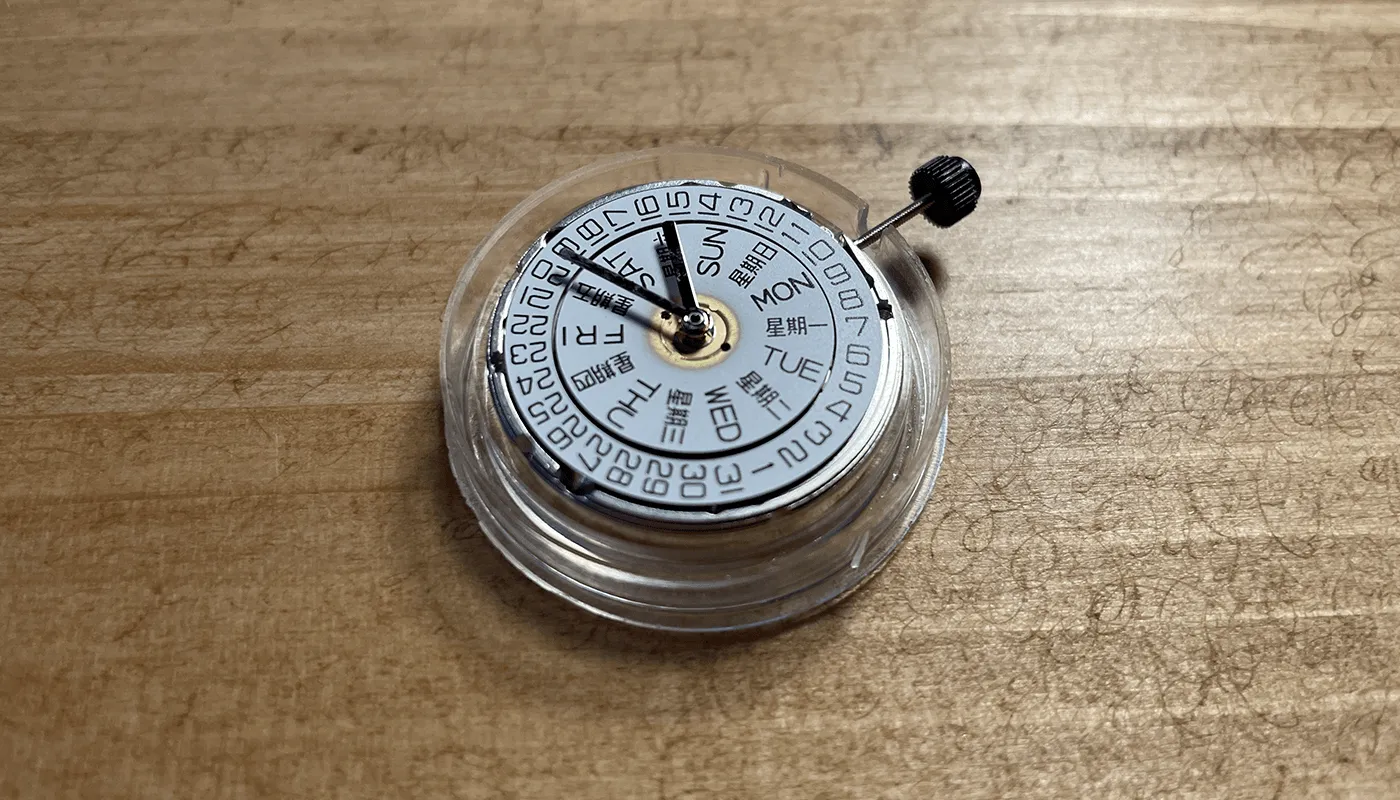
Inside every mechanical watch is a hairspring, a tiny steel coil that controls the swing of the balance wheel. On budget movements like the 2813, 2824, 2836 and Miyota 8215, it's a steel alloy that can pick up magnetism. When it does, the coils start to stick to each other, the spring effectively gets shorter, and the watch runs fast.
- A sudden, large gain. Not a few seconds, but tens of seconds or minutes a day, appearing out of nowhere.
- Erratic timekeeping that changes a lot between dial up and on the wrist.
- Odd timegrapher readings: a wild rate, a messy trace, or the app struggling to lock on.
- In bad cases the watch stops or runs in fits and starts.
A watch that has always run a bit fast or slow is more likely just to need regulating. A watch that suddenly changed is the one to suspect.
What magnetises a watch
Everyday life is full of magnets. The usual suspects:
- Phone cases with magnetic closures or mounts, and magnetic phone chargers.
- Laptops and tablets, which use magnets in the lid and around the trackpad, exactly where your wrist rests.
- Magnetic clasps on handbags, cases and some watch straps.
- Speakers, headphones and earbud cases.
- Fridge magnets, magnetic knife strips and induction hobs.
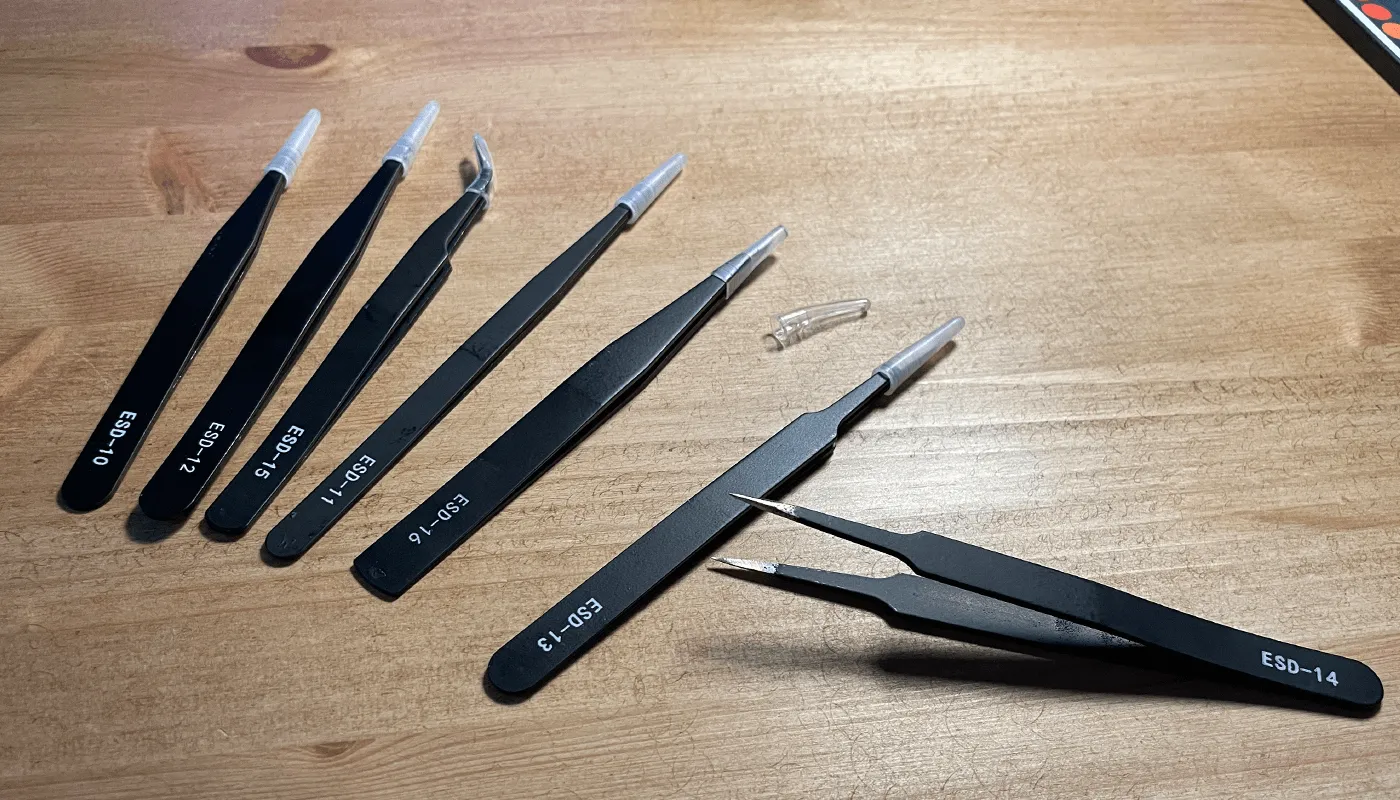
For builders there's one more: your own tools. Steel tweezers and screwdrivers pick up magnetism over time, and every time they touch the movement they can pass a little on, especially to the hairspring if you're working near the balance. If a freshly built watch runs fast straight away, a magnetised tool is a likely culprit. Test your tools the same way as the watch, and demagnetise them too.
I haven't had a build get magnetised yet, but I keep my tweezers and screwdrivers away from my laptop and speakers, and check them with a compass now and then.
The compass test
The simplest test needs only a cheap compass (or the compass app on your phone, though a real one is easier to read).
- Put the compass on a flat table, away from phones, laptops and anything metal.
- Let the needle settle pointing north.
- Slowly move the watch around the compass, close but not touching, in a circle and over the top.
- If the needle twitches or follows the watch, it's magnetised. If it stays still, it isn't (or only very slightly).
A steel case and bracelet can nudge the needle a little on their own, so the clearest test is with the movement out of the case or on the caseback side. Do the same with your tweezers and screwdrivers.
Using a cheap blue-box demagnetiser
The common budget demagnetiser is a small blue plastic box with a push button, sold on eBay and Amazon for a few pounds. It creates an alternating magnetic field that scrambles the magnetism in the hairspring. The trick is all in how you take the watch away.
- Take the watch off its bracelet if you can, or at least have it lying flat.
- Place the watch on top of the box.
- Press and hold the button.
- Keeping the button held, slowly lift the watch straight up and away from the box, to about an arm's length (30 cm or more), over a couple of seconds.
- Only once the watch is well clear, let go of the button.
- Repeat once or twice with the watch turned over or rotated 90°.
The key mistake is releasing the button while the watch is still on the box. Switching the field off suddenly can leave the watch as magnetised as before, or worse. The field needs to fade gradually, and moving the watch away while it's on does that. Don't hold the button down for long periods either; these little units get hot.
Demagnetising tools
Your tweezers and screwdrivers get the same treatment: lay them on the box, hold the button, draw them slowly away, release. Do it every so often, and any time a compass shows them picking up the needle. Brass and anti-magnetic tweezers help, as do keeping tools away from your phone and laptop on the bench.
More on the kit I use is on the tools page and in how to build your first watch.
Check it afterwards on a timegrapher app
Once you've demagnetised, redo the compass test, then check the rate. Fully wind the watch and put it on a timegrapher app (or a Weishi if you have one). A watch that was gaining minutes a day should drop straight back to roughly where it was before. If it's now within the usual range, you're done.
If it's still a long way out, try one more pass with the demagnetiser. If that doesn't move it, magnetism probably wasn't the problem. Look at regulating, or at the other causes in watch build problems and fixes: a hairspring that's been knocked, dirt in the movement, or low amplitude from tired oil. On a cheap clone, sometimes a new movement is the easiest fix; see service or replace a 2813 movement.